
What is the difference between Exegesis vs Eisegesis?
Exegesis draws meaning out of Scripture; eisegesis reads one’s own ideas into it. Exegesis examines the words, the context, and related passages so the text sets the agenda. Eisegesis uses the Bible as a prop for opinions already held — sadly the pattern of much modern preaching, where a topic is chosen first and verses are hunted afterwards. Faithful teaching begins with the passage.
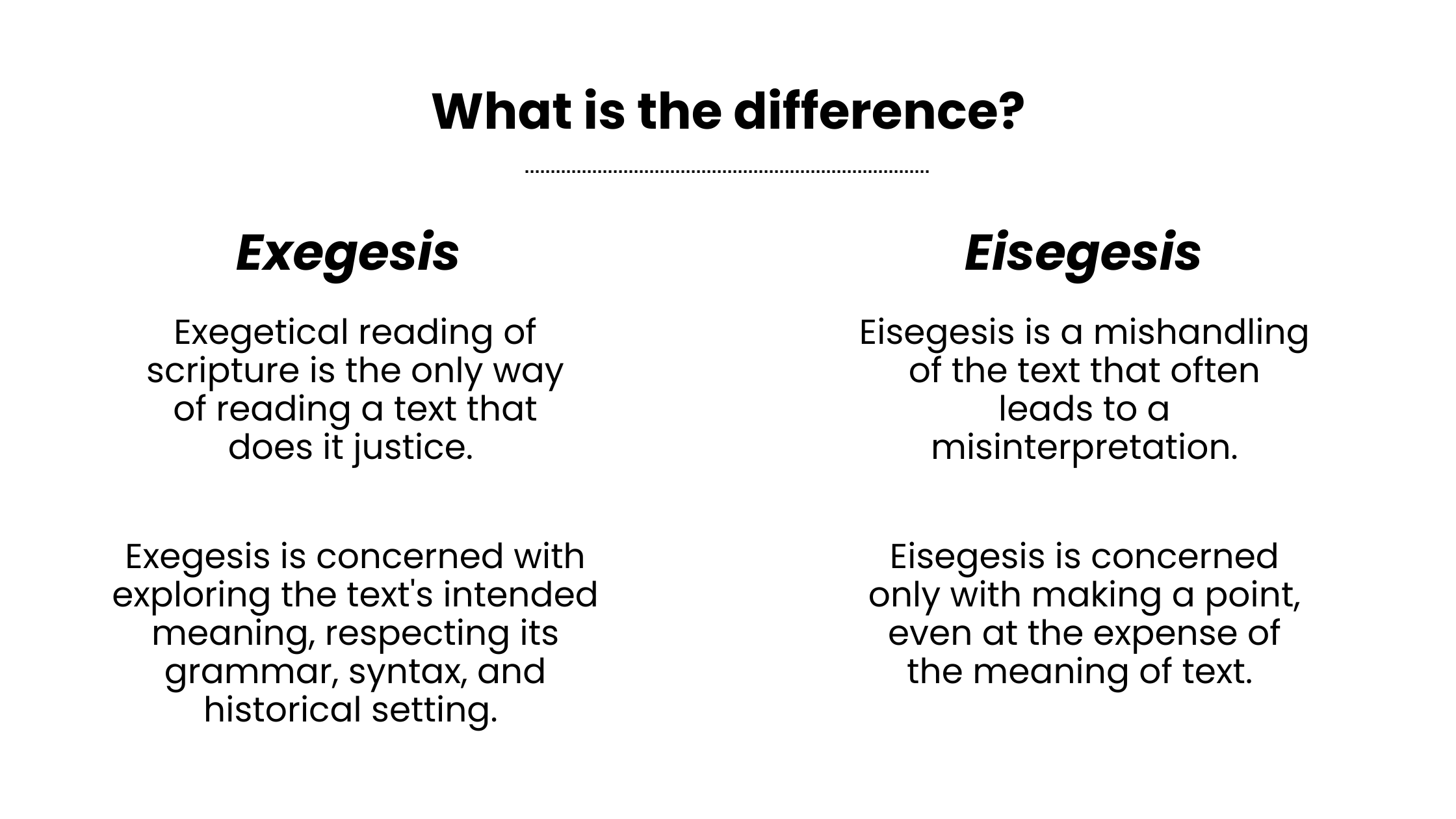
Below is a breakdown of the process of Exegesis / Eisegesis that takes place in the reading of scripture. Through this comparison, we can easily see how both methods of interpretation have very different focuses.
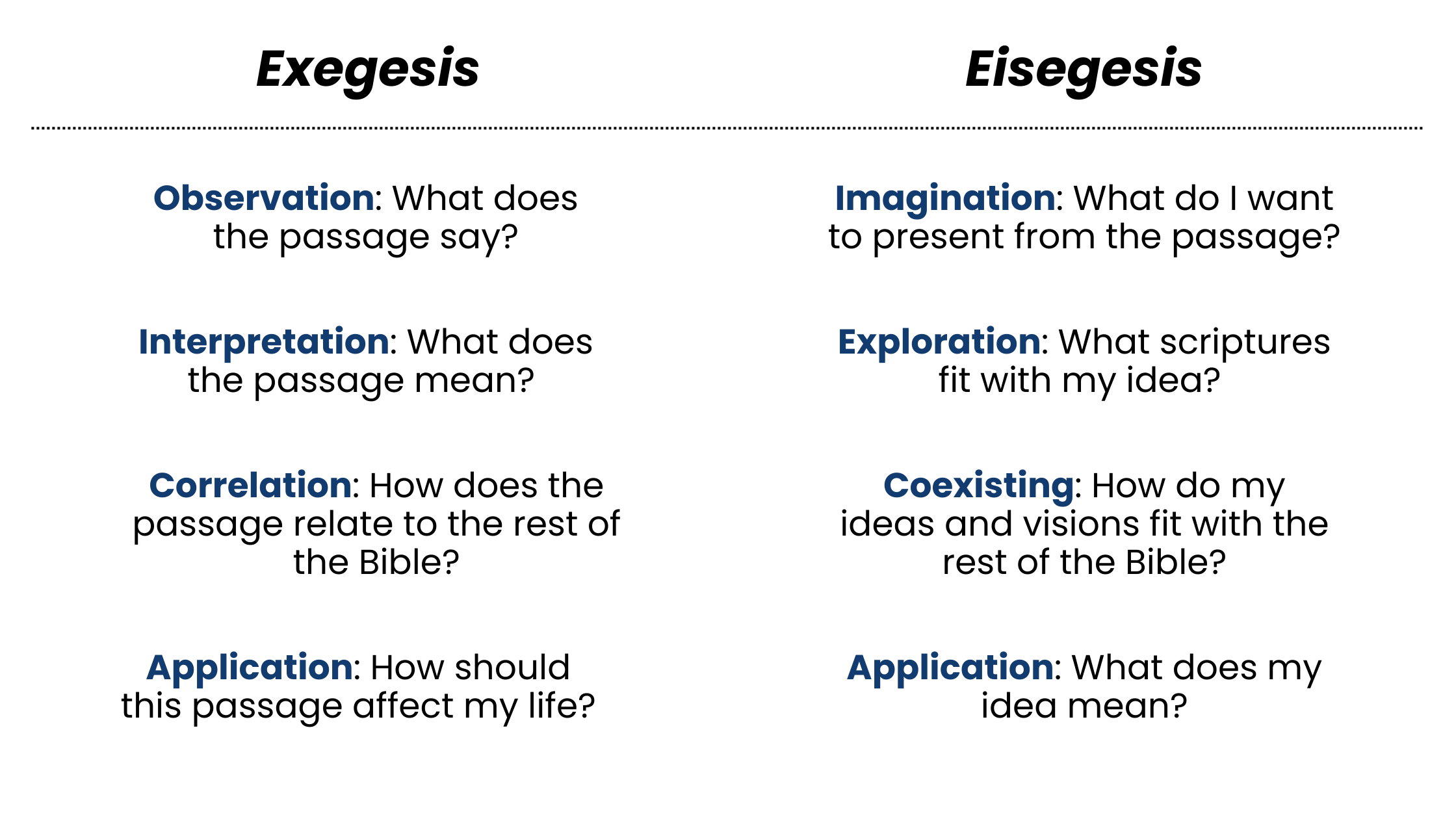
As you can notice from the above table, there are considerable shortfalls in the Eisegesis interpretation.
There is no examination of the individual words within the text and their relationship to each other, there is no cross-referencing with the related passages, and no genuine desire to understand the actual meaning.
In Eisegesis, the Scriptures serve only as a prop to the interpreter's own ideas. Unfortunately, this is how majority of the sermons in today's churches are being formed. The preachers start with an idea or topic in mind and then begin to search the scriptures for the relevant passages to support their ideas.
Instead, the proper approach to expositional preaching is to use scriptures as a basis of the sermon and allow the ideas, values and principles emerging from the passage to become the basis of the teaching.