
How could a loving God get angry?
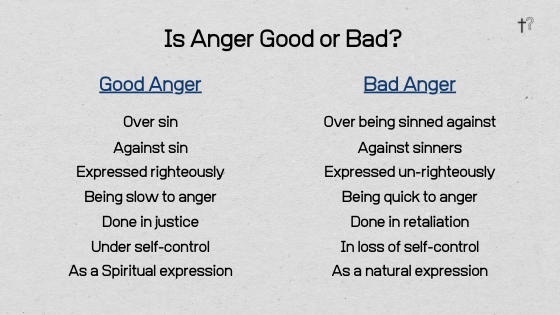
Anger itself is not sin — it is righteous when it defends God’s honor and just when it hates what harms. God is ‘angry with the wicked every day’ (Psalm 7:11), and Jesus cleansed the temple in sinless anger. It turns sinful when driven by wounded pride or revenge; we are to be ‘slow to anger,’ for the wrath of man does not produce the righteousness of God (James 1:19-20).
The question assumes that love and anger are opposites — that a God who is truly loving would not be an angry God. But think of a mother who is told that her small child has been deliberately harmed, and who feels nothing at all. We would not read her calm as a mark of love. We would read it as the absence of it. Where love is real, it carries anger at whatever damages the one it loves.
This is why the God of the Bible is not less loving for being angry, but more. Because He loves justice, He stands against injustice. Because He loves the weak, He opposes those who crush them. Because He loves His own glory and the good of His creatures, He is set against the sin that ruins both. His anger is not the failure of His love; it is His love turned toward evil.
Yet God's anger is not like ours, and this is where most of the confusion lies. When we speak of a person's anger, we usually mean a passion that rises and falls. God is not like this. He is not calm on one day and furious the next. His opposition to evil is as steady and unchanging as His holiness, because it flows from His holiness:
Psalm 7:11 (NKJV)
God is a just judge, and God is angry with the wicked every day.
Every day — as the constant, settled response of a holy God to all that defies Him. And the same unchanging character holds His mercy, patience, and love in full operation at the very same moment. God does not switch from one attribute to another as His mood turns.
That is why Scripture can call Him slow to anger in the very breath that it warns of His wrath:
Nahum 1:3 (NKJV)
The LORD is slow to anger and great in power, and will not at all acquit the wicked.
His patience is real, but it is not indifference: the God who is slow to anger is angry still, and He will not in the end treat evil as though it never mattered.
What about Jesus' anger when He cleared the temple? Here is the plainest proof that anger itself is not sin — the only sinless man who ever lived was angry.
Matthew 21:12-13 (NKJV)
Then Jesus went into the temple of God and drove out all those who bought and sold in the temple, and overturned the tables of the money changers and the seats of those who sold doves. And He said to them, “It is written, ‘My house shall be called a house of prayer,’ but you have made it a ‘den of thieves.’”
Here are a few things we can learn from that event:
Right source: Jesus' anger rose from love for God's honour, never from wounded pride or a personal slight. The first thing to ask of our own anger is where it came from: are we provoked by sin, or simply by being crossed?
Proper focus: His anger was directed at the wrong being done — the exploiting of God's house — not at the people themselves. Ours must strike at the offence, not turn to destroy the offender.
Proper control: What He did in the temple was deliberate and measured, never a loss of temper. The test for us is simple: are we governing our anger, or is it governing us?
Proper love: His anger came mingled with grief. When Mark shows Him angry at His critics, He is grieved by the hardness of their hearts (Mark 3:5) — indignant at the sin, aching over the sinner. Anger that has stopped loving the person has lost its ultimate motive.
Proper duration: He did not let anger harden into bitterness or hoard it as a grudge. He dealt with the wrong and moved on. Ours is meant to be the same — resolved, not nursed until it sours into resentment.
Proper end: His anger served God's purpose and bowed to God's Word. So the last question is the plainest: is ours seeking justice, or seeking revenge?
James said it well:
James 1:19-20 (NKJV)
So then, my beloved brethren, let every man be swift to hear, slow to speak, slow to wrath; for the wrath of man does not produce the righteousness of God.
Our anger seldom produces righteousness because it seldom comes from a righteous place. God's anger always does, because it always flows from who He is. A God who could look upon cruelty, injustice, and the ruin of what He made and feel nothing would not be a kinder God. He would be an indifferent one. The wrath of God is the measure of how seriously He takes the things — and the people — He loves.